Atopic dermatitis and eczema: how personalized pharmabiotics save the skin and why hormonal ointments only give a temporary effect

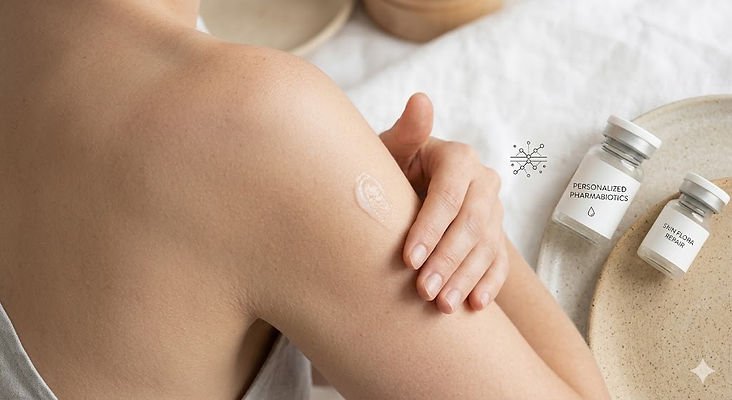
ABSTRACT: For years, patients with atopic dermatitis, eczema, acne, and rosacea have been walking in a vicious circle: exacerbation, use of hormonal (corticosteroid) ointments, temporary relief, and then an even stronger relapse. Classical dermatology often considers these diseases exclusively as a local skin problem. However, modern evidence-based 4P medicine proves: the skin is only a mirror of our internal state, and the real control panel for inflammation is in the intestines. The use of antibiotics or systemic retinoids to treat the skin often only deepens the ecological catastrophe in the body. In this article, we will analyze how the gut-skin axis forms dermatitis, which shows an in-depth analysis of the skin microbiota, and how innovative pharmabiotics allow you to return clean skin without destructive consequences.
PART I. The Gut-Skin Axis: Why External Treatments Are Doomed to Fail
The main mistake in the treatment of complex dermatological diseases (atopic dermatitis, psoriasis, eczema) is to ignore the single ecosystem of the body. The condition of the skin directly and unequivocally depends on the homeostasis (balance) of the intestinal microbiome.
When an imbalance occurs in the gastrointestinal tract - the number of beneficial lacto- and bifidobacteria decreases, and their place is taken by opportunistic microorganisms (for example, an excess of Escherichia coli or Klebsiella ) - the so-called "dyshomeostasis" or "allostasis" of the skin occurs. Toxins from the intestines enter the systemic bloodstream, which leads to a decrease in immunity and the launch of silent inflammation. The skin, as the largest organ of excretion and immune defense, takes the brunt.
That is why trying to cure atopic dermatitis or eczema solely with external creams or salon treatments is a fight against the consequences. Any external influence will only give results when the root cause in the intestines is eliminated.

PART II. Deep Skin Ecology: War of Invisible Worlds
If the gut is the root of the problem, then the skin is the battlefield. Billions of microorganisms live on the surface of our skin. However, a simple smear from the surface of the epidermis will not give the doctor any useful information, because the real pathogens of skin diseases are hidden in the deeper layers (the dermal layer).
When science began to dig deeper into the material, a startling picture emerged. In a healthy person, the skin is dominated by beneficial bacteria, such as Staphylococcus epidermidis . They are our protectors: these bacteria stimulate the production of keratinocytes, which are responsible for the immune response and the integrity of the skin barrier.
But in atopic dermatitis, this barrier breaks down, and an aggressive pathogen, Staphylococcus aureus , takes control . For a doctor, it is not just the presence of staphylococcus (after all, it can also run on healthy skin), but the diagnostic ratio : what percentage is beneficial flora and what percentage is pathogenic. When Staphylococcus aureus dominates, unbearable itching, weeping wounds (eczema) and chronic inflammation occur, which a person tears at night.
PART III. From diagnosis to healing: the 4P medicine algorithm
To stop this process, Ediens uses an evidence-based protocol that is radically different from mass-market dermatology.
1. Dual Omics Diagnostics
In case of complex dermatitis, the patient undergoes an in-depth study not only of the skin microbiota, but also of the intestinal (and sometimes oral) microbiota. This allows us to find the "root of the evil": which bacteria in the intestines provoke systemic inflammation, and which pathogens destroy the skin locally.
2. Targeted pharmabiotics instead of antibiotics
Classical medicine often prescribes antibiotics that kill both pathogenic Staphylococcus aureus and beneficial epidermal. This leads to even worse relapses. Modern science has developed pharmabiotics - new generation drugs with clinically proven effects on certain cohorts of patients. The main condition of pharmabiotics: it must act like a sniper. It purposefully inhibits (suppresses) the growth of opportunistic microorganisms, but at the same time does not harm its own beneficial microbes of the skin and intestines.
For skin problems, a niche pharmabiotic has been developed , “ My Beautiful Skin. Skin Microbiome ” . It is taken orally (inside), correcting the intestines, which, in turn, restores the skin, reducing rashes, manifestations of atopy and acne. Studies confirm that combinations of specific strains (for example, Lactobacillus helveticus, Bifidobacterium longum, Lactobacillus rhamnosus ) significantly improve the SCORAD index in patients with atopic dermatitis.
3. Personalized bio-cosmetics ( Soap with probiotics )
In addition to the influence from the inside, proper external care is necessary. Conventional shower gels destroy the remnants of the lipid barrier. Instead, science offers soap with probiotics. Moreover, after an in-depth analysis of the skin, the laboratory can produce soap according to an individual recipe . It is based on the exact strain of bacteria that is able to suppress the specific pathogen detected in the patient (for example, stop the reproduction of demodex or Staphylococcus aureus).

PART IV. Clinical Evidence: A Case of Skin Salvation
To understand how this works in practice, let's consider a documented clinical case from Ediens. A patient with a difficult complex diagnosis of atopic dermatitis, solar and seborrheic dermatitis, eczema, stress-related rashes, and occupational allergy to talc came to the specialists.
An in-depth study of the three microbiota (skin, gut, and oral) and genetic analysis of the microbiome were conducted. Based on the results, an individually selected course of pharmabiotics and personalized soap were prescribed.
The result is already on the 7th day of therapy:
Laboratory: the number of pathogenic bacteria and fungi decreased to normal, the balance of beneficial microorganisms was restored, and the level of inflammatory markers decreased.
Visually: wet areas (typical of eczema) have dried up, rashes, redness, and unbearable itching have significantly decreased.
To ensure long-term results, the patient was given an individual nutrition plan based on the genetics of his bacteria, which allows him to keep the disease in a stable remission stage.
CONCLUSION
Atopic dermatitis, acne and eczema are not a life sentence and not a reason to "sit" on corticosteroids for years. They are a signal of intestinal dysbiosis and destruction of the skin microbiome. The transition from blind "smearing" symptoms to in-depth microbiological diagnostics and the use of targeted pharmabiotics and probiotic cosmetics allows you to restore the body's natural protective barrier. Return your bacteria to balance - and they will return you clean, healthy skin.
❓ CLINICAL Q&A: 4 questions about the microbiome and dermatitis
1. Why do hormonal ointments for eczema and dermatitis often have only a temporary effect? Hormonal ointments (corticosteroids) artificially suppress the local immune response, relieving redness and itching. However, they do not eliminate the root causes of the disease - systemic inflammation, which originates from intestinal dysbiosis and the dominance of pathogens (for example, Staphylococcus aureus) in the deep layers of the skin. As soon as you stop applying them to the skin, the pathogens multiply again, causing an even stronger relapse. Treatment should come from the inside through the restoration of the gut-skin axis.
2. What are pharmabiotics and how do they differ from regular probiotics for the skin? Regular probiotics from mass-market pharmacies are often selected "blindly" and may contain strains that do not solve your problem or even conflict with your flora. Pharmabiotics (for example, the drug "My Beautiful Skin") are drugs with proven clinical efficacy that have been tested in cohort studies on people with dermatitis or acne. They act purposefully (targeted): they inhibit pathogens, but preserve and nourish your own beneficial bacteria.
3. Why examine the gut microbiome for skin problems? Because the body is a single system. Skin health is completely subordinate to the homeostasis of the gastrointestinal tract. If there is bacterial overgrowth syndrome, inflammation, or a lack of lactobacilli in the intestines, toxins enter the bloodstream and hit the skin, which is trying to remove them. Without normalizing the intestinal microflora, no external treatment for acne or eczema will be long-term.
4. Can regular soap treat skin with atopic dermatitis? Regular soap or aggressive shower gels only wash away the remnants of beneficial bacteria and the lipid layer, worsening the condition. Modern evidence-based science suggests using specialized soap with probiotics. After an in-depth analysis of the microbiome, the laboratory can create a personalized soap, which will be added to those live strains of bacteria that are able to destroy the pathogen on your skin and restore its local immunity.
Follow us on social media to follow the latest news here 💜:
Website: www.ediens.me
LinkedIn: www.linkedin.com/ediens
Instagram: www.instagram.com/ediens_official
TikTok: www.tiktok.com/@ediens_official


Comments