PTSD and Digestion: Why Military Rehabilitation Should Start with the Microbiome

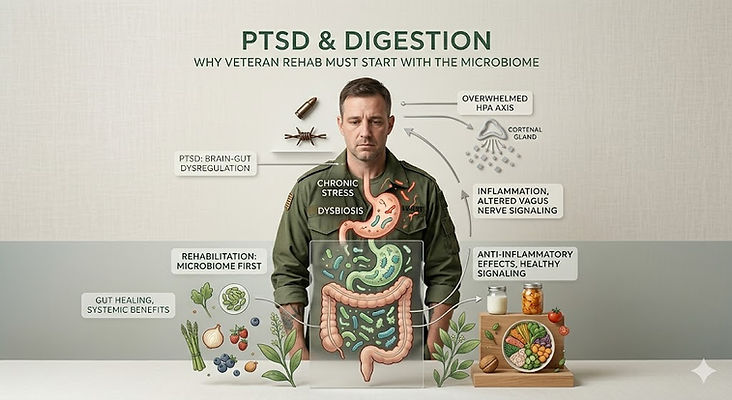
Introduction : War leaves behind not only visible physical scars, but also deep psychological trauma. According to experts, 12–20% of people who have experienced traumatic events develop post-traumatic stress disorder (PTSD). In modern combat conditions, military personnel are exposed to enormous levels of physical and psychological stress, which leads to exhaustion of the nervous system. Traditional approaches to the treatment of PTSD are mostly focused on psychotherapy and the use of psychotropic medications (for example, antidepressants), but they are not always effective, as they do not take into account the deep physiological changes in the body.
Today, the scientific community stands on the threshold of a biomedical revolution: new evidence suggests that the root of many mental disorders, including PTSD, depression, and anxiety, lies in our gut. Physiological rehabilitation of military personnel, aimed at restoring the gut microbiome, should be an essential first step on the path to their psychological healing.
The Gut-Brain Axis: The Physiological Basis of Mental Health
The concept of the gut-brain axis describes a bidirectional communication system between the central nervous system (brain) and the enteric nervous system (gut). This interaction occurs through neural, endocrine, metabolic, and immune pathways.
About 75% of our immune response, including resistance to various diseases, is maintained and formed by intestinal microorganisms. In addition, the microbiome plays a critical role in the synthesis of neurotransmitters. For example, most of serotonin (a hormone that regulates mood, sleep and emotional stability) is synthesized in the intestines with the participation of microbiota. Bacteria are also able to produce other neuroactive compounds, such as gamma-aminobutyric acid (GABA), which is the main inhibitory neurotransmitter of the brain and helps reduce anxiety. Any changes in the composition of the microbiota (dysbiosis) automatically affect the level of these neurotransmitters, which directly affects the emotional state and behavior.

How combat stress destroys digestion and immunity
The effect of stress on the body is an evolutionary survival mechanism. As noted by the famous neurobiologist Robert Sapolsky, during acute stress, the body mobilizes all resources for salvation: the heartbeat accelerates, and processes that are not critical for survival at a given moment (for example, growth, reproduction or digestion) completely stop. Digestion slows down or "turns off" because it requires a lot of energy, which is needed by the muscles in a moment of danger.
However, when a person is in a war zone, this stress becomes chronic. Chronic stress leads to hyperactivation of the hypothalamic-pituitary-adrenal (HPA) axis and prolonged elevation of cortisol levels. This has disastrous consequences for the gastrointestinal tract:
Leaky gut: Chronic stress disrupts the protective barrier of the intestinal mucosa. Microcracks ("leaky gut syndrome") allow bacterial toxins, particularly lipopolysaccharides (LPS) from gram-negative bacteria, to enter the bloodstream.
Systemic inflammation and neuroinflammation: The entry of toxins into the bloodstream triggers a systemic immune response—the body begins to produce pro-inflammatory cytokines. This inflammation spreads to the central nervous system, provoking the so-called neuroinflammation, which is the pathophysiological basis for the development of PTSD, depression, and anxiety.
Changing the microbial landscape: Studies show that intense physical and psychological stress, typical of the military, sharply shifts the balance of the microbiome towards dysbiosis: the number of beneficial lacto- and bifidobacteria decreases, while the population of opportunistic pathogens rapidly increases.
PTSD biomarkers in the microbiome
Today, PTSD is not just considered a psychological problem, but a condition with clear biological markers. Current research confirms that gut dysbiosis and altered barrier permeability are at the heart of PTSD. In particular, it has been found that the loss of bacteria from the Ruminococcaceae and Lachnospiraceae families is directly correlated with the severity of PTSD symptoms. Thus, PTSD has a clear biomarker in the microbiome, which opens the way to a completely new approach: early diagnosis of the condition through microbiota analysis and preventive intervention before the development of a severe clinical picture.

The problem of antibiotic resistance during hospitalization
Another critical problem in military rehabilitation is the consequences of wound treatment. When hospitalized, military personnel often receive massive courses of broad-spectrum antibiotics to prevent infections. This leads to two serious consequences: First, there is a problem of multiple antibiotic resistance, when pathogens of nosocomial infections become insensitive to treatment. Second, antibiotics "burn out" not only pathogens, but also the military's own protective intestinal microbiota. The loss of commensal bacteria deprives the body of a protective immune barrier and disrupts the synthesis of neurotransmitters, which significantly increases the vulnerability of the psyche to the development of PTSD. Therefore, rehabilitation must necessarily include a stage of restoring the microbiome to overcome the effects of drug intervention.
Psychobiotics and the " Speedy Recovery of Heroes " program
Given these physiological mechanisms, innovative approaches to rehabilitation are being developed in Ukraine. One such project is the “Speedy Recovery of Heroes” program, which is being implemented by the Ukrainian biotechnology company Ediens together with scientific partners. The program is based on the concept of 4P medicine (personalized, predictive, preventive, participatory) and aims to treat and prevent PTSD through the gut microbiome.
The process involves deep genetic sequencing (NGS) of the microbiome, analysis of biochemical markers, and the psychological state of the fighter. Rather than acting randomly, algorithms help identify specific triggers of dysbiosis.
The therapy uses so-called psychobiotics — special strains of bacteria that can positively affect brain function. For example, strains such as Bifidobacterium longum have a proven effect on reducing stress behavior, reducing anxiety, and modulating cognitive processes. The program is developing a special pharmabiotic "DefendX" (working title). It acts in parallel on the immune system and the nervous system, stimulating the production of serotonin and GABA, which physiologically suppresses anxiety and helps to avoid the consolidation of PTSD.
The effects of highly concentrated pharmabiotics are often felt from the first days: intestinal barrier function is restored, systemic inflammation is reduced, sleep quality improves, and "brain fog" disappears. This allows you to prepare a physiological foundation on which psychotherapy and other methods of psychological rehabilitation will work much more effectively.
Conclusions
The microbiome is not just a "digestive system", it is our second brain and the basis of immunity. Treating the psychological trauma of war exclusively with conversations or psychotropic drugs, ignoring the physiological exhaustion of the body and dysbiosis, means fighting the symptoms, leaving the cause. Rehabilitation of the military should be comprehensive and begin with the restoration of the "gut-brain" axis. Targeted correction of the microbiome with the help of personalized pharmabiotics and psychobiotics can not only accelerate recovery from injuries, but also become a powerful tool for the prevention and treatment of post-traumatic stress disorders.
Short questions and answers on the topic (Q&A)
1. How exactly can gut bacteria affect our mood and cause PTSD?
Answer: The gut and brain are constantly communicating through the gut-brain axis (the nervous, immune, and endocrine systems). Gut bacteria produce most of the body’s neurotransmitters, such as serotonin (the feel-good hormone) and GABA (the feel-good hormone). When the balance of good bacteria is disrupted by chronic stress, levels of these hormones drop, which physiologically triggers depression, anxiety, and contributes to the development of PTSD.
2. Why does combat stress destroy the gastrointestinal tract?
Answer: During acute stress, the body activates "fight or flight" mode, diverting energy and blood from the gut to the muscles, effectively shutting down digestion. When this stress becomes chronic, it destroys the intestinal lining, increases its permeability ("leaky gut"), and allows bacterial toxins to enter the bloodstream, causing neuroinflammation in the brain.
3. What are “psychobiotics” and how are they different from regular probiotics?
Answer: Psychobiotics are specific classes of live bacteria (such as certain strains of Bifidobacterium or Lactobacillus ) that have been scientifically proven to affect the central nervous system. Unlike conventional digestive probiotics, they specifically reduce levels of the stress hormone cortisol, reduce neuroinflammation, and modulate brain function, helping to treat anxiety disorders.
4. Why does hospitalization and treatment for injuries increase the risk of PTSD?
Answer: Wound healing is usually accompanied by the use of powerful antibiotics to prevent infections. Antibiotics massively destroy the beneficial intestinal microbiota. Without a protective microbial layer, the body loses the ability to regulate the immune system and synthesize mood neurotransmitters, which makes the soldier’s nervous system as vulnerable as possible to the development of post-traumatic stress disorder. Therefore, restoring the microbiome is a critical stage after antibiotic therapy.
Follow us on social media to follow the latest news here 💜:
Website: www.ediens.me
LinkedIn: www.linkedin.com/ediens
Instagram: www.instagram.com/ediens_official
TikTok: www.tiktok.com/@ediens_official



Comments