Back to work without burnout: How stress, gut and energy levels are connected


Introduction: Chronic Fatigue Syndrome and the “Return to Work” Phenomenon
The modern rhythm of life in a highly competitive environment places extremely high demands on our adaptability and productivity. Returning to an active work schedule after a vacation, weekend or long stressful periods is very often accompanied by a feeling of deep physiological and psycho-emotional exhaustion. People complain of chronic fatigue, "fog in the head", irritability, loss of motivation, sleep disturbances and heaviness in the body.
In an attempt to regain performance, most people usually resort to standard methods: increasing their consumption of coffee, energy drinks, stimulants, or taking synthetic vitamin complexes. However, these measures only provide a short-term illusory effect, followed by an even deeper, debilitating decline.
Why do traditional methods of restoring strength fail? The answer lies in the realm of molecular biology and neuroendocrinology: our energy level, stress resistance, and performance directly depend on the state of the gastrointestinal tract and the ecological balance of the intestinal microbiome . Hidden chronic inflammation and dysbiosis deprive cells of a mobile energy resource.
In this scientific article, we will analyze in detail the molecular mechanisms of the connection between psychological stress, the intestinal barrier, and energy metabolism, and also consider evidence-based biotechnological solutions from the Ukrainian company Ediens — targeted pharmabiotics "Metabolic Antistress" and "For Active Longevity" .
1. The Molecular Triangle: Stress, the Gut-Brain Axis, and Cellular Energetics
In order to understand why emotional exhaustion instantly affects physical condition, it is necessary to consider the functioning of the triangle: neuroendocrine system - intestinal microbiome - mitochondria .
A. Hypercortisolemia and its destructive effect on the gastrointestinal tract
In response to psychological or physical overload, the body activates the hypothalamic-pituitary-adrenal (HPA) axis, which is accompanied by a massive release of cortisol, the main stress hormone. In the short term, cortisol mobilizes resources, but its chronically high levels are detrimental to the gastrointestinal tract.
Cortisol causes spasm of the blood vessels of the stomach and intestines, slows down capillary blood flow and inhibits the secretion of digestive enzymes. In a state of stress, digestion is physiologically turned off, as the body diverts blood to the muscles and heart. Food ceases to be fully broken down and digested, creating a substrate for fermentation and putrefaction.
B. Leaky Gut Syndrome and Metabolic Endotoxemia
The intestinal wall is formed by a single-layer epithelium, the cells of which are tightly bound together by special protein contacts (zonulin, occludin). The surface of the epithelium is covered with a protective mucin gel.
Under the influence of chronic stress and nutrient deficiency, the beneficial microflora is depleted. Commensal bacteria, deprived of plant fibers, begin to break down the protective mucin layer. This leads to damage to tight junctions and the development of leaky gut syndrome.
As a result, components of the cell walls of gram-negative bacteria — lipopolysaccharides (LPS) or endotoxins — massively penetrate the systemic bloodstream. A state of metabolic endotoxemia arises , which activates immune cell receptors and causes long-term systemic chronic low-intensity inflammation (Low-Grade Inflammation) .
B. Mitochondrial Dysfunction: Why Energy Disappears
Mitochondria are the microscopic "power plants" of our cells, in which ATP (adenosine triphosphate) is synthesized - the main universal energy currency of the body.
When bacterial endotoxins and pro-inflammatory cytokines (IL-6, TNF-α) constantly circulate in the blood, they damage mitochondrial membranes and inhibit respiratory chain enzymes. The cell loses its ability to efficiently generate ATP from glucose and fatty acids. Cellular energy deficiency occurs.
No matter how much coffee or glucose you consume, your cells simply can't convert it into energy because their mitochondrial furnaces are shut down by systemic inflammation. This manifests itself in an overwhelming sense of exhaustion, muscle weakness, and brain fog.
2. Neurotransmitter failure and circadian rhythm disruptions
The intestine is often called the "second brain" because the autonomic enteric nervous system contains hundreds of millions of neurons and is in constant two-way communication with the brain through the vagus nerve.
A healthy microbiome acts as a major biochemical workshop for the production of critically important neurotransmitters:
Serotonin (over 90% of which is synthesized in the intestines by enterochromaffin cells with the participation of beneficial bacteria): is responsible for emotional stability, a sense of inner peace, and optimism.
Gamma-aminobutyric acid (GABA) : The main inhibitory neurotransmitter that calms the central nervous system, relieves anxiety, and prepares the body for sleep.
Dopamine : regulates motivation, focus, and the feeling of satisfaction from the work done.
When the intestinal microbiome undergoes destructive changes (dysbiosis) under the influence of stress and malnutrition, the synthesis of these compounds drops sharply. At the same time, the conversion of tryptophan into melatonin (the sleep hormone) is disrupted.
As a result, a person faces a persistent disruption of circadian rhythms: it is difficult to fall asleep in the evening due to increased cortisol and a lack of GABA, nighttime sleep becomes superficial and intermittent, and in the morning the body feels completely exhausted. The inability to fully recover at night only intensifies the stress reaction the next day.
3. Ediens Bioinnovations: Fundamental Science for Energy Support and Healthy Longevity
In order to break the pathological chain of "stress - dysbiosis - inflammation - exhaustion", not just symptomatic remedies are needed, but conceptually new developments. Ukrainian MedTech/BioTech company Ediens offers personalized solutions based on the principles of evidence-based 3P medicine (predictive, preventive and personalized).
Ediens is based on over 37 years of fundamental scientific research in the fields of microbiology, immunology and metabolomics. The company has created 4 unique databases, patented 13+ proprietary bacterial strains and developed a line of 8+ proprietary new generation pharmabiotics.
What is the fundamental difference between Ediens pharmabiotics and conventional probiotics?
Most pharmaceutical biologics are mass mixtures of random probiotic strains that do not have a clinically proven targeted effect. In contrast, Ediens pharmabiotics are formulas based on validated clinical data from stratified groups of patients with similar physiological disorders. They contain strictly identified, genetically certified proprietary strains in high working concentrations, which are not just temporarily present in the intestine, but restore the natural norm of the microbiota and replace depleted protective elements.

4. Ediens Targeted Pharmabiotics for Restoring Strength, Sleep, and Performance
To systematically overcome exhaustion syndrome, normalize metabolism, and restore stable energy, Ediens offers two highly effective biological products.
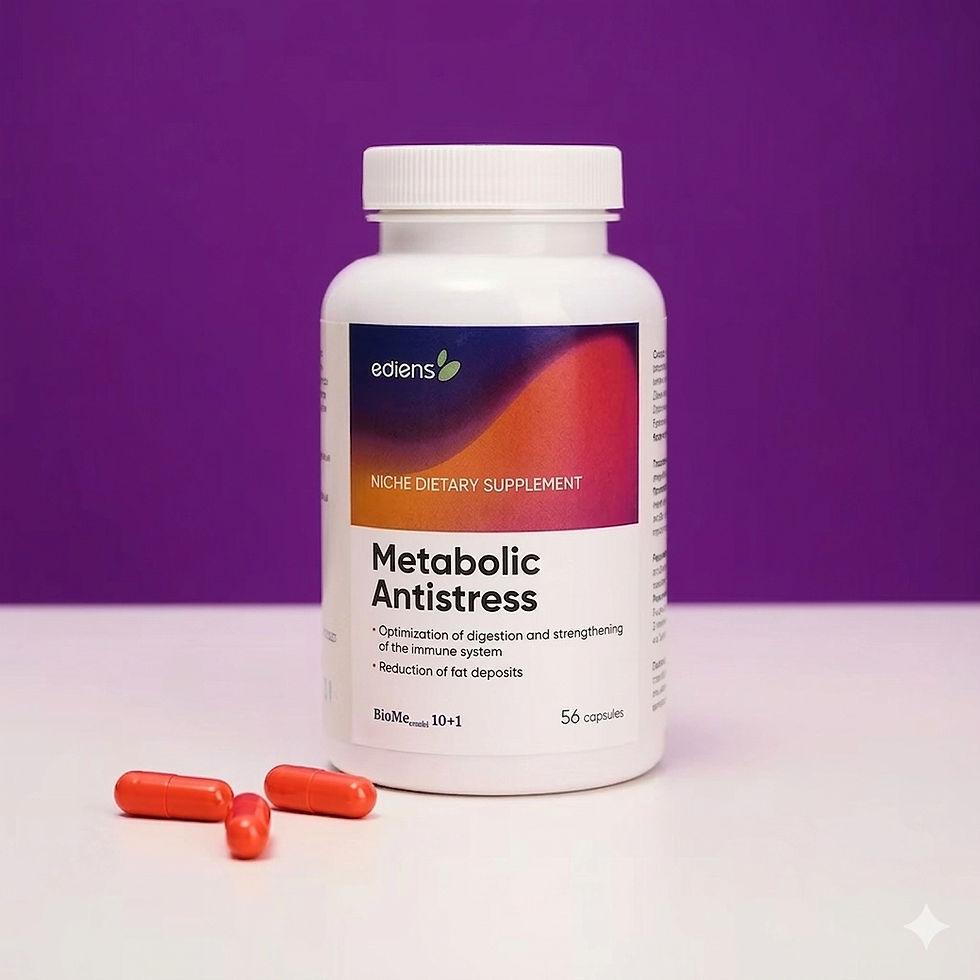
A. Niche Pharmabiotic " Metabolic Antistress "
The pharmacobiotic "Metabolic Antistress" is designed to support the body in conditions of high psycho-emotional, physiological and environmental stress. Its key task is to normalize the functioning of the gastrointestinal tract, reduce stress hormone levels and strengthen immunity.
Composition and biological formula: The basis of the drug is the exclusive patented probiotic strain Lactobacillus plantarum IMB B-7414 in high concentration (not less than $10^8$ CFU/ml), combined with natural plant prebiotic components that enhance its effect.
Mechanism of action on the body:
Psycho-emotional balance and anxiety reduction: L. plantarum IMB B-7414 strain has a targeted effect on the gut-brain axis. It has been clinically and scientifically proven (in European and Ukrainian studies) that this strain physiologically reduces cortisol levels, reduces irritability and anxiety, and improves concentration.
Restoring quality sleep: By stimulating the natural synthesis of melatonin and GABA precursors, the drug restores natural circadian biorhythms, ensuring deep and restorative sleep.
Digestion optimization and energy: The supplement stimulates the production of digestive enzymes and metabolites for complete food breakdown, improves nutrient absorption, neutralizes toxins, and provides stable energy for work and life throughout the day.
Metabolic Support: Helps optimize metabolism and reduce body fat.
Dosage and administration: The drug is available in convenient capsule form7. Take 1 capsule 2 times a day 30 minutes before meals or 2 hours after meals11. The standard course is 14 days (if necessary, the course can be repeated after 2 weeks).
B. Niche pharmabiotic " For active longevity "
For those who seek not only to overcome temporary exhaustion, but also to provide long-term protection against cellular aging, to maintain high performance and vitality at any age, the biological preparation "For Active Longevity" ("Stop Aging") has been developed.
Composition and biological formula: The biological preparation is created on the basis of a unique combination of proprietary probiotic strains: Lactobacillus plantarum IMB B-7414 , Lactobacillus casei IMB B-7412 and Enterococcus faecalis M4-II-I in the number of viable cells not less than $10^8$ CFU.
Mechanism of action on the body:
Preserving energy and endurance: The strain complex supports cell energy metabolism, eliminates chronic fatigue, and helps maintain high performance at any age.
Optimization of digestion and recovery after medication: Normalizes the functional state of the gastrointestinal tract, accelerates the regeneration of the mucous membrane and restores the intestinal microbiota after taking medications (in particular antibiotics or anti-inflammatory drugs).
Immune protection and slowing down aging: Increases the body's natural defenses, reduces markers of chronic systemic inflammation, and blocks the processes of premature cellular aging.
Release form: Convenient encapsulated form (packs of 84 capsules).
Conclusions and system protocol for returning to productivity
Returning to active work without feeling exhausted is entirely possible if you change your approach from exhausting stimulation of the nervous system to deep biochemical recovery.
Step-by-step recovery protocol from Ediens:
Eliminate chemical irritants: Reduce your intake of sugar, artificial stimulants, and coffee, which dehydrate and keep cortisol high.
Ensure gentle hydration: Drink enough clean water at room temperature to maintain intestinal transit.
Take the course of pharmabiotics "Metabolic Antistress": a 14-day course of the drug will reduce cortisol levels, relieve anxiety, restore deep sleep, and optimize nutrient absorption.
Consolidate the result with the pharmabiotic "For active longevity": It will help to completely restore the microbiome after stress or medication, strengthen immunity and ensure a high level of performance1012.
Choose proven science, take care of your microbiome, and return to work with inexhaustible energy and joy of life with Ediens developments!
Short questions and answers (Q&A)
1. How are chronic stress, gut health, and lack of energy related? Answer: Chronic stress is accompanied by high levels of cortisol, which suppresses digestion and destroys the intestinal lining. This causes leaky gut syndrome and the release of bacterial toxins into the bloodstream. Systemic inflammation occurs, which damages mitochondria (the cellular power plants), blocking the synthesis of ATP energy. The result is an overwhelming feeling of physical and mental exhaustion.
2. Why don't coffee and energy drinks help overcome fatigue? Answer: Coffee and stimulants only temporarily cause the adrenal glands to secrete additional adrenaline and cortisol, which further depletes the nervous system. In addition, coffee increases stomach acidity, increases gastrointestinal vasospasm, and speeds up food transit, preventing nutrients from being absorbed, which only deepens cellular energy deficiency.
3. What is unique about the pharmabiotic "Metabolic Antistress" from Ediens? Answer: "Metabolic Antistress" is based on the patented author's strain Lactobacillus plantarum IMB B-7414 and prebiotics. It acts directly through the "gut-brain" axis, physiologically reducing cortisol levels, eliminating anxiety, improving concentration and restoring deep restorative sleep. In addition, the drug stimulates digestive enzymes and neutralizes toxins.
4. How does the pharmabiotic "For Active Longevity" help maintain performance? Answer: The pharmabiotic "For Active Longevity" contains a complex of three proprietary strains ( L. plantarum IMB B-7414, L. casei IMB B-7412, E. faecalis M4-II-I)12. It optimizes digestion, quickly restores the microbiota after medication or stress, reduces the level of systemic inflammation, and supports mitochondrial activity of cells, ensuring high performance and vigor at any age.
Follow us on social media to follow the latest news here 💜:
Website: www.ediens.me
LinkedIn: https://www.linkedin.com/company/ediens/
Instagram: www.instagram.com/ediens_official
TikTok: www.tiktok.com/@ediens_official



Comments