Lemonade, cola or water: how sugary drinks affect the gut and oral microbiome

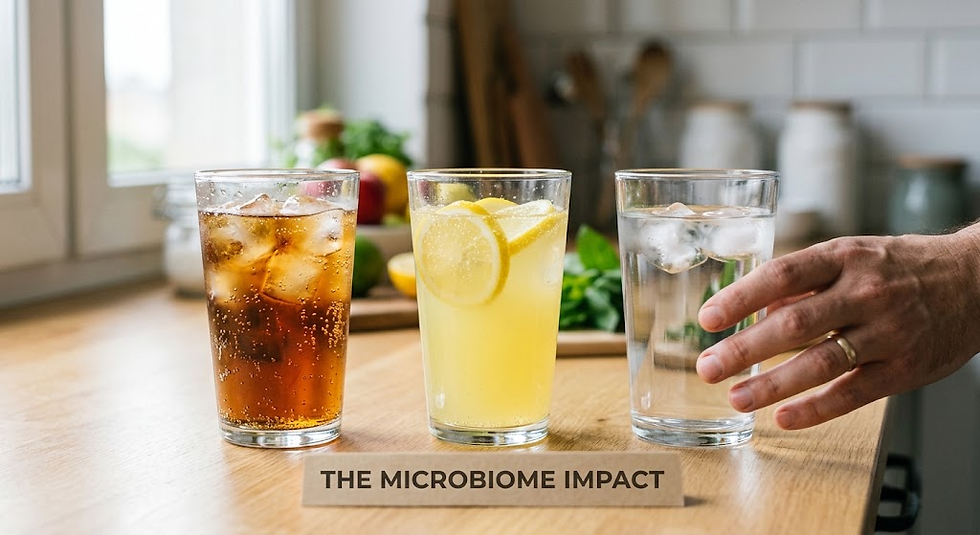
The modern world offers us a multitude of gastronomic temptations, among which sweet carbonated drinks, industrial lemonades, colas and packaged juices occupy almost the first place in the daily diet of city dwellers. They attract with their bright taste, quick feeling of cheerfulness and aggressive marketing. However, from the point of view of molecular biology, immunology and preventive medicine, each bottle of sweet drink is a real chemical blow to the most important protective systems of our body.
The human body is now considered by scientists to be a unique symbiotic "superorganism", the vital activity of which is provided by trillions of microorganisms. This huge genetic fund that inhabits our mucous membranes is called the microbiome. It is ubiquitous, that is, omnipresent, and plays a crucial role in maintaining our immune, mental and metabolic health. The largest and most active microbial biotopes of our body are the oral cavity and intestines, which are directly connected to each other through the digestive tract. In this scientific article, we will analyze in detail how sugary drinks destroy the oral and intestinal microbiomes, why ordinary clean water remains the only physiologically correct liquid for our body, and what innovative biotechnological solutions from Ediens help to return the body to a state of microbial balance.
1. The oral microbiome is the first line of immune defense that sugar destroys
The oral cavity is the gateway to the digestive tract and one of the most densely populated microbial niches in our body. Saliva is an extremely rich and favorable nutrient substrate that contains amino acids, proteins, lipids, carbohydrates and inorganic substances. Under physiological health conditions, the oral microbiome consists of several clearly balanced biotopes: the microflora of mixed saliva, the gingival sulcus, the dorsum of the tongue, the tonsillar folds and dental plaque.
This microbiological shield provides a natural protective barrier for the oral mucosa and is responsible for local immunity. However, drinking sodas, cola, and juices instantly destabilizes this system:
Acid attack and demineralization: Most carbonated drinks and sodas contain large amounts of orthophosphoric, citric and malic acids, which dramatically lower the pH in the oral cavity. The acidic environment damages tooth enamel and creates optimal conditions for the survival of exclusively acidophilic (acid-resistant) microorganisms.
Sugar trap for pathogens: Simple carbohydrates such as sucrose and fructose-glucose syrup, which are abundant in sweet drinks, are ideal fuel for cariogenic bacteria, in particular streptococci ( Streptococcus mutans and others). When given a large amount of sugar, these bacteria multiply rapidly, form a dense biofilm (dental plaque) on the teeth and secrete additional organic acids that destroy enamel, cause caries and gingivitis.
Local immune dysfunction: Chronic exposure to sugars increases the oral microbiome with pathogenic and nonspecific opportunistic species, such as gram-negative Escherichia coli and Klebsiella oxytoca . At the same time, there is a sharp decrease in the level of secretory immunoglobulin A (sIgA) , the main antibody of the mucous membranes, which makes the oral cavity defenseless against viral and bacterial infections.
Clinical signs of the disorder: The main symptoms of oral dysbiosis caused by sugary drinks are persistent bad breath (halitosis), redness, swelling, and bleeding of the gums (gingivitis), white or yellow plaque on the tongue, and frequent ulcers and erosions on the mucosa.

2. Gut microbiome under pressure from sugary drinks: metabolic disruption
After passing through the mouth, the remains of sugary drinks enter the intestines. The normal intestinal microbiome does a tremendous amount of work: it helps us break down food, synthesizes essential vitamins (K, C, B12), folic acid, as well as short-chain fatty acids (SCFA) - butyrates and propionates, which nourish intestinal cells and suppress systemic inflammation.
When a person regularly consumes sugary carbonated drinks, the normal balance of the intestinal ecosystem is catastrophically disrupted:
Osmotic shock and dehydration of beneficial bacteria: A large amount of concentrated sugar solution creates high osmotic pressure in the intestines. Water begins to flow out of bacterial cells, leading to dehydration, loss of activity, and mass death of beneficial commensal bacteria.
Growing "monsters" in the intestines: Simple sugars that do not have time to be absorbed in the small intestine enter the large intestine and become a source of nutrition for opportunistic flora and yeasts (for example, Candida parapsilosis ). This causes processes of putrefaction, rapid fermentation, bloating, flatulence and pain.
Leaky Gut Syndrome and Low-Grade Inflammation: Beneficial microorganisms, deprived of natural complex fibers, switch to eating the protective mucin layer of the intestinal wall. The destruction of this barrier leads to the fact that toxic bacterial components (lipopolysaccharides) freely enter the bloodstream. This triggers long-term asymptomatic chronic inflammation of low intensity (Low-Grade Inflammation) , which is the root cause of the development of atherosclerosis, obesity, metabolic syndrome and type 2 diabetes.
Who controls whom: bacterial dictate: Scientific studies prove that a disturbed microbiome begins to directly manipulate the host's eating habits. Bacteria accustomed to fast carbohydrates secrete signaling molecules that affect insulin resistance, leptin and appetite hormones (GLP-1), sending a demand to the brain: "I want sweets, I want a bun, I want a Coke!" The person falls into a vicious cycle of addiction.
3. Water as the only natural and physiologically safe solution
Unlike sugary drinks, plain, pure, still water has a neutral pH and contains no dissolved simple sugars. It performs important physiological functions:
Rapid transit: Water quickly passes through the stomach and enters the intestines, maintaining the natural homeostasis of the mucous membranes.
Protection against osmotic stress: It does not create pathological osmotic pressure, preserving the viability of beneficial microflora.
Cleansing and detoxification: Water is a natural solvent that helps eliminate metabolic waste products and maintains the optimal consistency of protective mucus.
To maintain a healthy microbiome, room temperature water should be your primary source of hydration throughout the day.

4. Biotechnological solutions from Ediens: Restoring oral and intestinal health based on 3P medicine
When the microbial balance has already been significantly disrupted by years of poor diet and sugary beverage consumption, simply giving up sodas may not be enough. The body needs precise, scientifically based, and targeted help.
Ediens, a Ukrainian biotechnology company, is building on over 35 years of fundamental scientific research led by Professor Nadiya Volodymyrivna Boyko to create personalized precision health solutions. Ediens offers revolutionary products to restore balance to mucous membranes “from mouth to gut.”
A. Niche Pharmabiotic “My Fresh Breath” (Oral Microbiome)
To purposefully restore the oral ecosystem and eliminate dental problems, Ediens has created an innovative new generation pharmabiotic
Unique natural composition: The drug is available in the form of convenient sachets. Each dose contains a balanced composition of unique proprietary strains of beneficial bacteria: Lactobacillus bulgaricus S6, Lactobacillus plantarum A and Lactobacillus delbrueckii subsp. bulgaricus S19 in high concentration (not less than $10^8$ CFU).
Proven clinical efficacy: The formula was developed in collaboration with the Laboratory of Pediatric Dentistry of the Jagiellonian University in Krakow and implemented in dental practice810. Clinical trials on patients with chronic gum inflammation (gingivitis) and caries showed impressive results after just 14 days of use.
Results of the action:
There is a rapid decrease in the titers of cariogenic streptococci near the tooth neck (to a safe level of $10^3$ CFU/ml), which are the main cause of plaque and caries formation.
Key immune markers in saliva are normalized: the level of secretory IgA (sIgA) increases significantly, restoring local immunity, and markers of active inflammation (TNF-α and IL-6) decrease sharply.
The root cause of bad breath (halitosis) is completely eliminated, the gums return to their natural pink color, and bleeding and sensitivity disappear.
B. Systemic solutions for intestinal recovery from Ediens
In parallel with the normalization of oral microflora, Ediens offers a comprehensive approach to intestinal restoration:
Diagnostics and Personal Protocol : You can undergo a full genetic analysis of the intestinal microbiome using NGS (next-generation sequencing) technology33. Based on the analysis, the unique EdiensUniCode (BioQuantum) IT algorithm will develop a personalized nutrition plan and an individual scheme for selecting targeted pharmabiotics for gentle restoration of the intestinal barrier.
Niche pharmabiotic " My Second Brain. Intestinal Microbiome ": Allows you to quickly curb the processes of fermentation and bloating in the intestines, inhibits the reproduction of Candida yeast fungi , normalizes motility, improves mood, and restores ease of digestion.
Conclusions Lemonades and cola act as destructive chemical agents that provoke deep dysbiosis of the mouth and intestines, caries and systemic inflammation. Plain water remains the only physiological standard of hydration. And the combination of healthy habits with innovative pharmabiotics from Ediens, in particular the unique drug "My Fresh Breath" , allows you to return your mucous membranes to their original natural strength, giving you a healthy smile, fresh breath and strong immunity for many years!
Short questions and answers (Q&A)
1. How exactly do sugary drinks cause dental caries and gingivitis in the oral cavity? Answer: Sugary drinks contain a large amount of simple sugars (sucrose, syrups) and acids1112. Acids damage tooth enamel, and sugars become ideal food for pathogenic streptococci. Bacteria actively multiply, form persistent plaque and secrete acidic metabolites, which provokes dental caries and inflammatory processes of periodontal tissues (gingivitis).
2. Why can regular consumption of cola and lemonades cause bloating and heaviness in the intestines? Answer: Concentrated sugars in sweet drinks cause osmotic pressure, due to which beneficial microflora dehydrates and dies. In turn, opportunistic microorganisms and yeasts (for example, of the genus Candida ) receive excess sugar and start the processes of rapid fermentation and putrefaction of food, which is accompanied by active gas release, bloating and discomfort.
3. What unique strains are contained in the pharmabiotic "My Fresh Breath" and how do they work? Answer: The pharmabiotic "My Fresh Breath" contains a composition of three patented author's strains of beneficial lactobacteria: Lactobacillus bulgaricus S6, Lactobacillus plantarum A and Lactobacillus delbrueckii subsp. bulgaricus S19 in high concentration. They actively suppress dental pathogens, reduce the level of pro-inflammatory cytokines and stimulate the production of local mucosal antibodies (sIgA).
4. What did clinical studies of the drug "My Fresh Breath" show? Answer: Clinical studies conducted jointly with the Laboratory of Pediatric Dentistry of the Jagiellonian University and dentists in Uzhhorod showed that after 14 days of taking the drug, the titers of cariogenic streptococci near the tooth neck decreased to the minimum safe level ($10^3$ CFU/ml). This significantly reduced the formation of dental plaque, stopped inflammatory processes in the gums and eliminated the main microbiological cause of bad breath.
Follow us on social media to follow the latest news here 💜:
Website: www.ediens.me
LinkedIn: https://www.linkedin.com/company/ediens/
Instagram: www.instagram.com/ediens_official
TikTok: www.tiktok.com/@ediens_official


Comments