What is the right way to take probiotics and pharmabiotics: water, juice, coffee or smoothie? Scientific analysis of bioavailability


The problem of survival of microorganisms in the gastrointestinal tract
Today, supporting the intestinal microbiome has become one of the main priorities of preventive and personalized medicine. We are increasingly aware that the health of the intestinal microflora depends not only on the quality of digestion, but also on our immunity, skin condition, metabolism and even mental health. However, buying a high-quality probiotic or targeted pharmabiotic is only half the battle. The main task is to ensure the delivery of live beneficial bacteria to the large intestine, where they should colonize the mucosa and begin their therapeutic work.
The path of bacteria through the gastrointestinal tract is like passing through an obstacle course. They are hindered by the aggressive acidic environment of the stomach, bile acids in the duodenum, and digestive enzymes. Many people unknowingly destroy up to 90% of beneficial bacteria at the stage of taking the drug, simply by washing it down with an unsuitable liquid. The daily routine - drinking a capsule with morning coffee, freshly squeezed juice, or a healthy, at first glance, smoothie - can completely negate the therapeutic effect of the most expensive biological product. In this scientific article, we will analyze in detail the physiological aspects of the interaction of various liquids with probiotic cultures and find out how to properly take pharmabiotics to achieve maximum benefit.
1. Physiology of the gastric barrier and the temperature factor
The stomach acts as a natural protective filter for our body. Thanks to the secretion of hydrochloric acid, the pH level in the stomach on an empty stomach is from 1.5 to 2.0. This is an extremely acidic environment that can quickly denature proteins and destroy most pathogenic bacteria that enter with food. Beneficial probiotic microorganisms are also sensitive to acid, so modern manufacturers use special enteric-coated capsules to protect them.
However, the temperature and volume of liquid with which the drug is taken play a critical role in how quickly the capsule passes through the stomach and whether the bacteria inside it survive.
Why does temperature matter?
Live bacteria (lacto-, bifidobacteria, and other commensals) are thermosensitive organisms. The optimal temperature for their vital activity corresponds to the temperature of the human body — about 36–37 °C.
Hot drinks (over 40 °C): Drinking probiotics or pharmabiotics with hot tea, coffee or even just warm water is fatal to bacteria. At temperatures above 42 °C, irreversible denaturation of proteins in the bacterial cell membranes begins, leading to their instant death. The capsule protects against acid, but has no thermal insulation properties.
Ice drinks (less than 15 °C): Cold water with ice causes local spasm of the gastric mucosal vessels and slows down motility. This causes the capsule to remain in the stomach for a longer time, being exposed to gastric juice for a longer time, which increases the risk of premature dissolution in an acidic environment.
Scientists' conclusion: The ideal liquid for drinking probiotics is clean, still water at room temperature (20–25 °C) or slightly warm (up to 30 °C). It ensures rapid transit of the capsule through the stomach without temperature shock for microorganisms.
2. Coffee and hot tea: a triple whammy on bacteria
Many people take vitamins and probiotics with breakfast, washed down with their favorite coffee or tea. From a microbiological perspective, this is the worst-case scenario for several reasons:
The effect of high temperature: As mentioned above, the temperature of coffee or tea is usually 60–80 °C, which is absolutely lethal to living bacterial cells.
High acidity of coffee: Coffee contains a large amount of organic acids (chlorogenic, citric, malic) and has a pH of around 4.5–5.0. When combined with gastric juice, this creates an additional acidic load that damages the cell membranes of beneficial bacteria if the capsule begins to dissolve prematurely.
The effect of tannins and caffeine: Tea and coffee are rich in tannins - astringent compounds that have pronounced antimicrobial properties. Tannins are able to bind to proteins on the surface of bacterial cells and inhibit their activity. In addition, caffeine stimulates intestinal peristalsis, which speeds up transit too much. As a result, beneficial bacteria simply do not have time to establish themselves (colonize) on the intestinal mucosa and are excreted from the body in transit.
3. Freshly squeezed and packaged juices: acid and osmotic shock
Freshly squeezed juices are considered a symbol of a healthy lifestyle, but drinking them with live bacteria is a serious mistake.
Acid pressing: Most fruits (especially citrus fruits, apples, pomegranates) contain a large amount of natural acids. For example, the pH of orange juice ranges from 3.3 to 4.2, while lemon or pomegranate juice can be even lower. When the capsule with the juice enters the stomach, it is subjected to a double acid attack.
Osmotic pressure of sugar: Juices contain a high concentration of simple sugars (fructose and glucose). When a concentrated sweet solution surrounds a bacterial cell, a phenomenon called osmotic pressure occurs. Water from inside the bacterial cell begins to flow out to balance the concentration of salts and sugars in the surrounding environment. This leads to dehydration, shriveling, and death of the bacteria (osmotic shock).
Feeding pathogens: If the bacteria from the probiotic are killed by the acid and sugar of the juice, the sugar itself enters the intestines in transit and becomes ideal food for opportunistic yeast fungi (for example, the genus Candida ), provoking fermentation and flatulence.
4. Smoothies and thick drinks: a digestive trap
It would seem that a thick green smoothie rich in plant fiber should be the perfect companion for a probiotic, since fiber is a prebiotic (food for bacteria). However, this is where digestive physiology comes into play.
When we drink a glass of pure water on an empty stomach, it is practically not retained in the stomach. The water quickly passes through the so-called “gastric groove” along the lesser curvature of the stomach and in 10–15 minutes enters the duodenum. Together with it, the capsule with bacteria quickly leaves the stomach, avoiding prolonged contact with hydrochloric acid.
Instead, a smoothie is a thick, high-calorie mixture that our body perceives as a complete solid food. When a smoothie enters the stomach, it triggers a full gastric phase of digestion:
The maximum amount of gastric juice and pepsin is produced.
The gastric sphincter closes, and the process of active mixing and digestion of the contents begins, which can last from 1 to 2 hours.
The capsule of beneficial bacteria is trapped in this hot, highly acidic “cauldron” along with digestive enzymes for an extended period of time. Most bacteria simply cannot survive in such conditions.
Scientific rule: Smoothies are great food for the microbiome, but they should be consumed separately — at least 30–40 minutes after taking a biological product.

5. Innovative protection technologies: why the Ediens pharmabiotics line is uncompromising
Understanding all the complexities of bacterial transit through the aggressive environment of the gastrointestinal tract, the Ukrainian biotechnology company Ediens abandoned the creation of standard pharmacy probiotics. Ediens has developed a line of new-generation targeted pharmabiotics , which are based on 35 years of fundamental scientific research and have unique protection systems.
Pharmabiotics are not just a mixture of random strains of bacteria. They are strictly selected, genetically certified microorganisms with proven clinical efficacy at the molecular level, produced in high working concentrations (not less than $10^8$–$10^9$ CFU/g) and protected from aggressive factors of the external and internal environment.
Overview of the Ediens pharmabiotics line:
" My second brain. Intestinal microbiome " This flagship product in the form of convenient sachets is designed to quickly restore the intestinal ecology. It contains a unique complex of live lyophilized strains, including the patented strain Lactobacillus rhamnosus S25 and the Lactobacillus bulgaricus family . The drug purposefully suppresses pathogenic flora, quickly stops the processes of fermentation and putrefaction of food, eliminating bloating, heaviness and flatulence. Due to the high concentration of viable cells and the synergy of strains, it instantly colonizes the intestines, restoring the integrity of the mucous barrier.
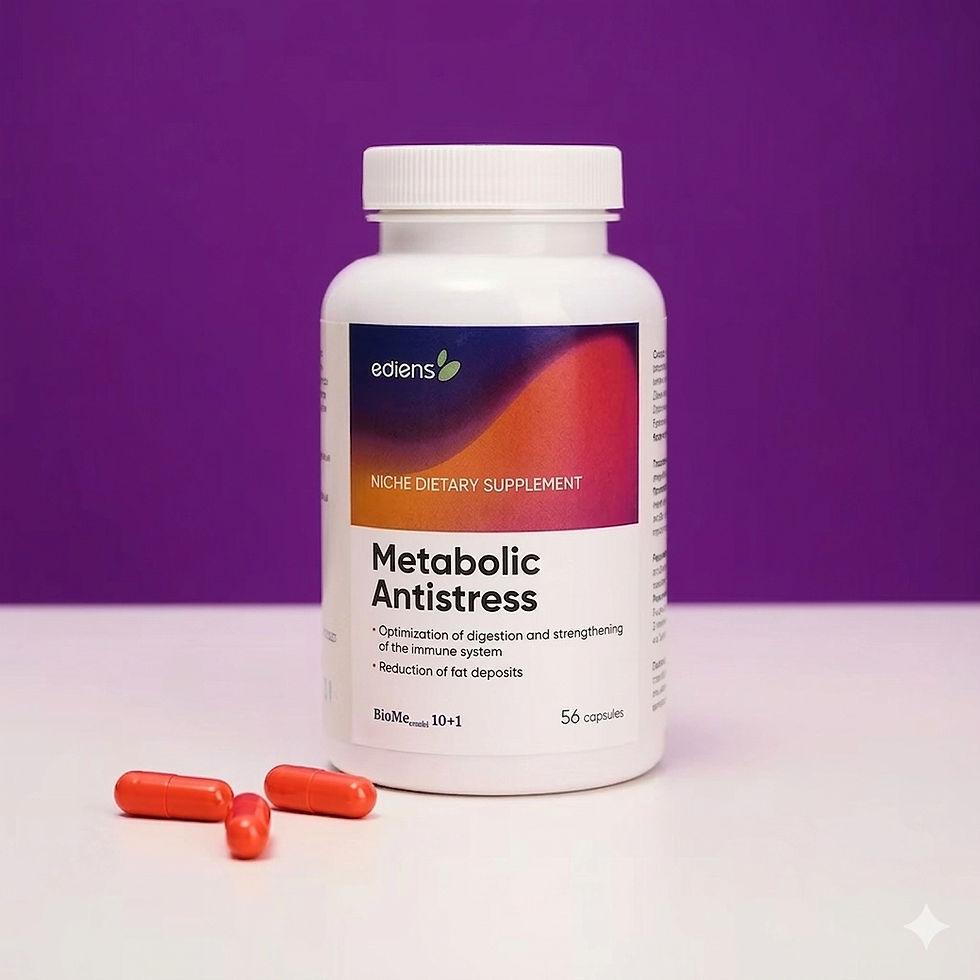
" Metabolic Antistress " A unique psychobiotic that acts through the "gut-brain" axis. The basis of the drug is the exclusive patented strain Lactobacillus plantarum IMB B-7414 in combination with natural prebiotic extracts. It physiologically reduces the level of cortisol (stress hormone), eliminates chronic anxiety, improves concentration, stimulates the synthesis of serotonin and GABA directly in the gastrointestinal tract, and also returns high-quality, deep sleep.
" ProfiLactOr " is a functional pharmabiotic aimed at the general prevention of systemic diseases, metabolic syndrome and improvement of the blood lipid profile. It trains our immune system, increases the body's resistance to viral and bacterial infections and stimulates the production of short-chain fatty acids (SCFA), which nourish intestinal cells and prolong the body's youth.
DefendeX ™Specialized pharmabiotic with ultra-targeted action, designed for the rehabilitation of the body after severe stress overloads, antibiotic therapy and systemic inflammatory processes. It quickly restores the protective biofilm on the mucous membrane, blocking the penetration of endotoxins into the blood.
Thanks to the use of advanced freeze-drying and microencapsulation technologies, the bacteria in Ediens products are in a state of suspended animation and are reliably protected from harmful factors. However, to get 100% of the benefits from these innovative developments, it is necessary to adhere to the correct culture of their consumption.
Conclusions and practical admission protocol
Proper use of pharmabiotics is the key to their high bioavailability and effectiveness. To ensure that beneficial bacteria achieve their goal, follow a simple scientific protocol:
The best choice of liquid: Swallow the capsules or dissolve the powder from the sachet exclusively in clean, non-carbonated water at room temperature (20–25 °C).
Time of administration: Take pharmabiotics on an empty stomach (30 minutes before a meal) or 2 hours after a meal. This ensures minimal residence time of the drug in the stomach and rapid transit to the intestines.
Avoid combinations: Never take probiotics with coffee, tea, juice, soda, or alcohol.
Take breaks: If you want to drink your morning coffee or eat a healthy fruit smoothie, do it at least 30–40 minutes after taking your pharmabiotic. During this time, the beneficial bacteria will have already passed the dangerous zone of the stomach and are safe.
Choose proven science and precision quality with the Ediens pharmabiotics line, and your microbiome will thank you with good health, a stable nervous system, and inexhaustible energy every day!
Short questions and answers (Q&A)
1. Can I drink probiotics with coffee if it has already cooled down a bit? Answer: No, you shouldn't do this. Even if the coffee is warm, it contains a large amount of organic acids and caffeine. The acidity of coffee creates an additional burden on beneficial bacteria, and caffeine excessively stimulates intestinal motility. This accelerates the elimination of the drug from the body, preventing bacteria from gaining a secure foothold on the mucous membrane.
2. Why are smoothies or thick juices not suitable for washing down with bacteria capsules? Answer: Smoothies and thick juices are perceived by the stomach as a complete solid food. Their ingestion triggers a long digestion process, during which a large amount of hydrochloric acid and enzymes are released, and the exit from the stomach is closed for 1–2 hours. The capsule with bacteria is blocked in this acidic environment for a long time, which leads to the death of most microorganisms.
3. What is the ideal water temperature for taking pharmabiotics? Answer: The ideal water temperature for taking probiotic cultures is 20 to 25 °C (room temperature). Hot water (over 40 °C) causes thermal denaturation of proteins and instantly kills live bacteria, while ice water causes vasospasm and delays the movement of the capsule through the gastrointestinal tract.
4. Why are Ediens pharmabiotics more resistant to external factors than conventional pharmacy probiotics? Answer: Ediens products are created on the basis of advanced microencapsulation and lyophilization technologies, which reliably protect beneficial strains. The company uses exclusively genetically certified, clinically proven strains in ultra-high concentrations (for example, in the preparations "My Second Brain" and "Metabolic Antistress" ), which have natural resistance to gastric juice and bile, which guarantees high colonization of the patient's intestines.
Follow us on social media to follow the latest news here 💜:
Website: www.ediens.me
LinkedIn: https://www.linkedin.com/company/ediens/
Instagram: www.instagram.com/ediens_official
TikTok: www.tiktok.com/@ediens_official


Comments