Bacterial Overgrowth Syndrome (BOGS): Etiology, Metabolic Consequences, and a Scientific Algorithm for Targeted Biota Correction


Bacterial overgrowth syndrome (SIBS or SIBO) has long remained in the “blind spot” of classical gastroenterology. For decades, patients have complained of severe flatulence (“feeling 5 months pregnant”), impaired nutrient absorption, and chronic fatigue. Traditional treatment with broad-spectrum antibiotics often provides only a temporary effect, leading to relapses. This article reveals the mechanisms of SIBS at the cellular level and offers a modern algorithm for precise correction of the microbiota using pharmabiotics and personalized nutrition.
PART I. Pathogenesis of SIBO: When bacteria cross borders
In a healthy body, there is a clear spatial distribution of microorganisms. The small intestine, where nutrient absorption occurs, is a relatively "clean" zone. In contrast, the large intestine is a densely populated "megapolis" where food residues are fermented.
SIBO occurs when bacteria from the large intestine migrate into the small intestine, or when transient opportunistic flora begins to multiply uncontrollably due to reduced stomach acidity, stress, or impaired motility. The consequences of this shift are catastrophic for metabolism:
Toxic fermentation: Bacteria begin to consume carbohydrates that were intended for the host. This results in the release of huge amounts of gases (hydrogen and methane) and lactate. This causes severe bloating, cramps, and osmotic pressure disturbances.
Barrier dysfunction: Pathogen waste products, particularly lipopolysaccharides (LPS), destroy the mucosa. Leaky gut syndrome occurs, and endotoxins enter the bloodstream, causing systemic inflammation that can even manifest on the skin or in the form of depressive states.
SCFAs deficiency: In SIBO, the balance of short-chain fatty acids (butyrates, propionates), which are the main source of energy for epithelial cells and regulators of local immunity, is disrupted.
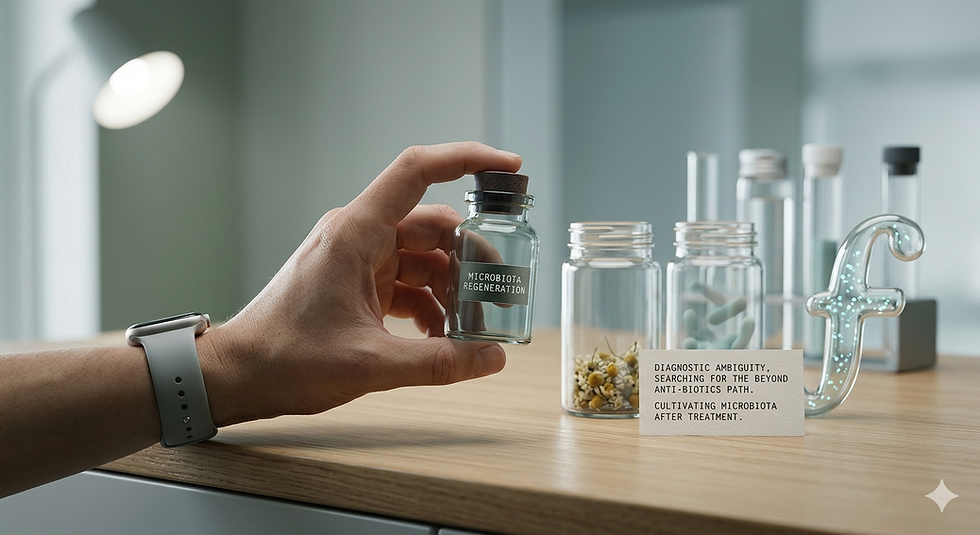
PART II. The Diagnostic Deadlock and the Myth of “Good” Probiotics
The classic approach to treating SIBO is based on the administration of intestinal antiseptics or antibiotics. However, after sanitation, a critical question arises: how to restore the flora?
Mass prescribing of multi-strain probiotics (30-36 strains per capsule) has been blindly recognized by modern evidence-based microbiomics as not only ineffective, but also dangerous. Colonization of foreign bacteria in the small intestine in SIBS can increase gas formation and inflammation. In addition, mass-market preparations often have a low concentration of live cells and die in the acidic environment of the stomach.
The patient finds himself in a state of frustration: he receives an expensive test that confirms dysbiosis, but does not receive clear tools to solve the problem.
PART III. Directional Correction Protocol (Ediens Methodology)
Solving the problem of SIBR requires abandoning templates in favor of precision medicine. The scientific correction protocol consists of three sequential stages.
Instead of the outdated culture for dysbacteriosis, two levels of analysis are used:
In-depth study of the microbiota (culturomics): Identification of commensal and opportunistic microorganisms to the species (takes 3-5 days). The goal is to determine the exact diagnostic correlation and find the etiological agent of inflammation.
Microbiome Genetic Analysis (NGS) and Metabolomics: Studying the DNA of all microorganisms to understand their functional capacity. An omics profile shows which metabolites (e.g., excess methane or deficiency of butyrate) your biota produces.
After identifying the "culprits" of SIBR, targeted correction with proprietary pharmabiotics is applied. Pharmabiotics are drugs with proven clinical efficacy. Their uniqueness in the treatment of SIBR lies in two factors:
Competitive inhibition: Strains are manually selected so that they specifically inhibit the growth of the pathogens found (e.g. Klebsiella or excessive E. coli ), but are guaranteed not to inhibit the patient's own beneficial lacto- and bifidobacteria.
High concentration and survival: The preparations have a concentration of 109−1010 CFU/ml and are resistant to an acidic environment, which allows them to reach the affected area. For SIBO and related syndromes, the specialized complex “Intestinal Microbiome” or “Active Longevity” is most often used.
Any bacterial therapy will have a transit effect if microorganisms are not provided with specific nutrition. If you simply add a lot of fiber to SIB, it will cause a severe exacerbation. Therefore, an individual nutrition plan is being developed based on European databases (EuroFIR) and the author's mathematical IT algorithms. The algorithm calculates which products will act as prebiotics for the desired bacteria and will deprive the nutrient substrate of pathogens that cause SIB.

PART IV. Microbiota Bank: Biological Capital Insurance
After successful treatment of SIBO and restoration of eubiosis, modern science offers an innovative procedure - the creation of an Individual Bank of Commensal Microbiota. Your own beneficial bacteria are isolated, cultured and lyophilized for long-term storage. If in the future the patient encounters severe stress or requires aggressive antibiotic therapy, he will not have to start complex treatment of SIBO again. He will be able to restore his gastrointestinal tract with his own, 100% compatible microflora.
🔬 CLINICAL Q&A: 4 questions about SIBO and the microbiome
1. What is the difference between irritable bowel syndrome (IBS) and SIBO?
IBS is primarily a functional disorder (motility and gut-brain axis disorders), while SIBS is a physical overgrowth of bacteria in the small intestine where they should not be. However, these conditions often coexist: SIBS can be the cause of IBS symptoms. Accurate genetic analysis of the microbiome allows us to differentiate these conditions and identify the etiology.
2. Why can't you just drink kefir or regular pharmacy probiotics with SIBO?
In SIBO, there is already an excess of bacteria and fermentation processes in the small intestine. The use of uncontrolled multi-strain probiotics or fermentation products blindly can increase gas formation and inflammation. Correction should be exclusively targeted: specific pharmabiotics are used that suppress specific pathogens without stimulating a general bacterial overpopulation.
3. How long is the course of treatment with pharmabiotics for SIBO?
According to clinical protocols, the standard course of taking pharmabiotics is 14 days. Constant, continuous intake is not recommended to avoid oversaturation and adaptation of the body. Usually, up to three 14-day courses are prescribed with breaks of 10-14 days between them. Further, the condition is maintained exclusively through personalized nutrition.
4. Do I need to donate blood to create a nutrition plan for SIBO?
Yes. To develop a truly therapeutic nutrition plan using IT algorithms, three components are required: 1) results of a genetic analysis of the microbiome (Omics profile), 2) a comprehensive patient questionnaire regarding symptoms, 3) a biochemical blood test (no more than 1 month old). This allows us to take into account limiting factors (for example, impaired lipid or carbohydrate metabolism) and create a safe and effective diet.
Follow us on social media to follow the latest news here 💜:
Website: www.ediens.me
LinkedIn: www.linkedin.com/ediens
Instagram: www.instagram.com/ediens_official
TikTok: www.tiktok.com/@ediens_official



Comments