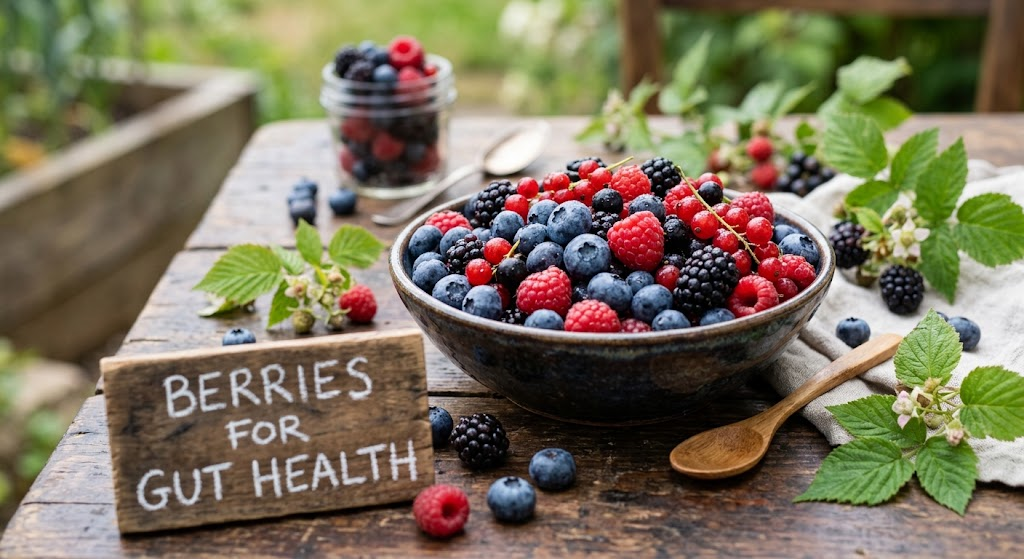
Berries and the Gut Microbiome: The Benefits of Blueberries, Blackberries, Raspberries, and Currants


For a long time, nutrition science viewed berries mainly as a source of vitamin C and sugars. But the rise of molecular microbiology, metabolomics, and the concept of 4P medicine (predictive, preventive, personalized, and participatory) has completely changed how scientists see their functional role. It's now proven that berries are among the most powerful natural regulators of gut microbiome composition and metabolic activity, thanks to their high content of polyphenols (anthocyanins, ellagitannins, flavonols, proanthocyanidins) and dietary fiber (pectins, cellulose).
About 90–95% of plant polyphenols are not absorbed in the small intestine due to their complex structure and travel on to the colon, where they become a substrate for bacterial fermentation. This creates a two-way symbiosis: polyphenols and fiber suppress opportunistic flora and stimulate the growth of beneficial bacteria (Akkermansia muciniphila, Bifidobacterium spp., Faecalibacterium prausnitzii), while the microbiome breaks polyphenols down into bioactive metabolites (phenolic acids, urolithins, valerolactones) with systemic anti-inflammatory and antioxidant effects.
Blueberries: A Shield for the Gut Lining and a Growth Factor for Akkermansia muciniphila
Wild and cultivated blueberries lead in anthocyanin content — flavonoid pigments that give the berries their deep blue-purple color.
Stimulating Akkermansia muciniphila — blueberry anthocyanins act as a selective prebiotic substrate for this bacterium, which restores mucin, maintains tight junctions, and correlates with resistance to obesity and insulin resistance.
Suppressing metabolic endotoxemia — blueberry metabolites block the NF-κB pathway in epithelial cells, reducing gut wall permeability ("leaky gut") and preventing lipopolysaccharides from entering the bloodstream.
Boosting SCFA synthesis — fermentation of blueberry pectins by Bifidobacterium and Bacteroides raises acetate and butyrate levels — the main energy substrate for colonocytes.
Raspberries and Blackberries: Ellagitannins, Urolithins, and Epithelial Regeneration
Raspberries (Rubus idaeus) and blackberries (Rubus fruticosus) are rich in ellagitannins (sanguiin H-6, lambertianin C) — complex ellagic acid polymers that specific gut bacteria (Gordonibacter urolithinfaciens, Ellagibacter isourolithinifaciens) sequentially convert into urolithins (A, B, C, D).
Urolithin A and mitophagy — a powerful stimulator of the removal of damaged mitochondria in gut epithelial and immune cells, speeding up mucosal regeneration and restoring cellular energy production.
Supporting Faecalibacterium prausnitzii — fiber and ellagitannins create a favorable anaerobic environment for this bacterium, whose deficiency is seen in IBS and ulcerative colitis.
Black Currants: Proanthocyanidins and Gut Immunity
Black currants (Ribes nigrum) are a concentrate of bioactive compounds: a record-high vitamin C content, proanthocyanidins, flavonols (quercetin, myricetin), and water-soluble pectins.
Stimulating secretory IgA — currant polysaccharides and proanthocyanidins interact with Peyer's patches, boosting sIgA production and local mucosal immune defense.
Selective antibacterial action — organic acids and tannins suppress Clostridium perfringens, E. coli, and Staphylococcus aureus without harming beneficial lacto- and bifidobacteria.
Optimizing motility — soluble pectin acts as a gentle natural enterosorbent, binding bile acids and toxins and normalizing stool consistency.
The Metabotype Phenomenon: Why Berries Affect Everyone Differently
The very same serving of berries gives one person energy and lightness, while another experiences bloating, heartburn, or digestive upset. The reason lies in each person's individual gut microbiome profile (metabotype):
Metabotype A
The microbiome contains the bacteria needed to synthesize mainly Urolithin A — the most beneficial ellagitannin metabolite.
Metabotype B
The microbiome produces Urolithin B, C, and Isourolithin A — a weaker effect than metabotype A.
Metabotype 0
In 20–30% of people, urolithin-producing bacteria are completely absent. Consuming raspberry ellagitannins won't produce the expected effect until the corresponding bacterial pool is restored.
If someone has hidden SIBO or a deficiency of fiber-fermenting bacteria, the organic acids and fructose in berries reach the colon undigested and ferment vigorously, causing cramps and gas. Some berries (currants, raspberries) also contain oxalates and can release endogenous histamine — with a compromised gut barrier, this can trigger pseudo-allergic reactions. That's why the blanket advice to "eat more berries" no longer works — a personalized approach to diet is needed.
An Innovative Solution from Ediens: Microbiome Nutrition Plan
To turn a berry-rich diet into a precise health tool, Ediens developed the digital Microbiome Nutrition Plan service within the Biocode4U platform, drawing on 35+ years of research led by Professor Nadiia Boiko.
1. Genetic sequencing (NGS 16S rRNA)
A gut microbiome analysis determines the exact bacterial species composition, phylum ratios, presence of pathogens, and levels of SCFA producers.
2. The EdiensUniCode algorithm (BioQuantum)
Your genetic profile is matched against a database of interactions between plant polyphenols, pectins, and flavonoids from berries and specific bacterial species.
3. A personalized nutrition plan
The system determines exactly which berries, in what portions, your microbiome needs — and which Ediens pharmabiotics to add to restore fermentation capacity.
Here is the pharmabiotic lineup Ediens most often recommends alongside a berry-rich diet:
Conclusions
Blueberries, blackberries, raspberries, and currants are unique biofactories of polyphenols, ellagitannins, and prebiotic fiber capable of restoring the gut lining, lowering systemic inflammation, and slowing cellular aging. But their full benefit only shows up when your diet matches your gut microbiome's actual fermentation capacity. Ediens' Microbiome Nutrition Plan helps you find out exactly what your microbiome needs and build a personalized diet for health, energy, and longevity!
Frequently Asked Questions (FAQ)
How exactly do berries affect the growth of beneficial gut bacteria?
Berries are rich in polyphenols (anthocyanins, ellagitannins) and soluble fiber (pectins). Most of these compounds aren't absorbed in the small intestine and reach the colon, where they serve as a selective nutrient substrate for beneficial bacteria such as Akkermansia muciniphila, Bifidobacterium spp., and Faecalibacterium prausnitzii, stimulating their growth.
What are urolithins, and why don't they form in everyone who eats raspberries or blackberries?
Urolithins (especially Urolithin A) are potent anti-inflammatory metabolites formed when gut bacteria break down raspberry and blackberry ellagitannins. Producing them requires specific bacteria (such as Gordonibacter), which are absent in 20–30% of people due to dysbiosis (Metabotype 0).
Why does eating a lot of fresh berries sometimes cause bloating and stomach pain?
If someone has hidden gut dysbiosis, SIBO, or mucosal inflammation, the organic acids, fructose, and high fiber content of berries aren't fully absorbed. They ferment vigorously with opportunistic yeast and gas-forming bacteria, causing gas, bloating, and cramping.
How does the Microbiome Nutrition Plan help choose berries and a diet tailored to your microbiome?
The Microbiome Nutrition Plan is based on DNA analysis of your gut microbiome (NGS sequencing). The EdiensUniCode algorithm analyzes your bacterial deficiencies and pinpoints exactly which berries, in what portions and combinations, your microbiome needs without the risk of bloating or discomfort.
Follow us on social media to stay updated with the latest news here 💜:



Comments